The Power of Perseverance

There are falls on the way to Golgotha, but gloriously there is a rising up. Jesus somehow finds strength before his mother and Father to rise up and keep going. He keeps going in the midst of astounding physical, social and spiritual pain. He finds strength. He finds will. This is the capstone moment of perseverance. Everyone falls. But not everyone rises.

Oh Lord, my God– I see you fall. My hero cast to the ground! The Creator of wood and gravity, casts His life on the canvas of my shame. His eyes behold the hill. With exhaustion and thirst, He bears the inheritance of bloodshed ages hence.

Look on the face of Jesus as He falls. He feels the injustice of carrying a burden that is not His own. Men of acquired authority force the one eternal Authority to rise up.

With little human strength remaining within His torn flesh and weary eyes, He rises up.

Lord, teach me to rise.

He bears injustice

(Teach me to bear injustice)

Somehow, He finds strength.

(Lord, Jesus Son of God, show me Your strength.)

Lord, in the rush of days when all seems lost and I grow weary of the battle. Teach me to rise up.

…to rise up even in times of humiliation and exhaustion,

…to rise up in determination

…to rise up in the midst of my own degradation

…to rise up, when mocking voices of the enemy seek my retreat at dawn.

…to rise up, when earthly authority seems to overtake and depose me.

…to rise up, as I look to the Holy Cross of Christ.

Perseverance is the “having done all, to stand” part of your journey. Sometimes all you can do is stand. The Lord must fight for you and that’s what He is doing today on Your behalf. That thing that seems so impossible to overcome is being handled. He’s totally and overwhelmingly capable. Do you trust God enough to let Him do the heavy lifting?


Forgiveness: A Bridge Worth Saving

Jesus said, “Father, forgive them, for they do not know what they are doing.”
Luke 23:34

How important is it to forgive? Eternally important.

Welsh poet of the 1600s, George Hebert writes, “He who cannot forgive breaks the bridge over which he himself must pass.”

Eight things I’ve learned about unforgiveness

  1. Being unwilling to forgive is never helpful.
  2. And revenge just doesn’t work. Never….
  3. Your unwillingness to forgive is a sign of unbelief.
  4. It will ultimately destroy your character.
  5. Unwillingness to forgive poisons joy.
  6. It will set your mind to believing that you are more important than Jesus. He humbled Himself to offer forgiveness and you will not?
  7. It negates the power of the cross in your journey.
  8. When we are unwilling to forgive, the pain becomes an idol.

The pain is consuming to the person who doesn’t forgive. We become stuck. We fantasize vindication. We look at relationships surrounding the offense in a possessive manner. We cling to bitterness as our beverage of choice. We talk about it to people who have no business hearing of it. We dream about going back, doing things differently, saying something more damaging, or avoiding the offense.

My unwillingness to love and forgive makes life about me and NOT the Incarnation of grace-filled Jesus who longs to abide in me.

When we forgive we forfeit our miseries and choose to live in the present. We no longer have the need to marinade in the poison of nurtured malice. We lose our self-important disappointments. We embrace everything that Jesus, on the cross, suffered to apprehend.

Choosing not to forgive is choosing to live backwards. Forgiveness frees up the energy it takes to bear the burden of anger indefinitely. Because God has forgiven all our sins, we should not withhold forgiveness from others.

One other thought about forgiveness-perhaps the most important one. It’s in the form of a question:

Have you forgiven yourself?

Lord, when You were on trial, You would not speak to save Your life. Teach me the art of trust and forgiveness even when I am in the midst of wrongs done to me. Teach me to speak grace and truth, not so much in a desire to be seen as right, but rather to humbly participate in the ministry of reconciliation.

The One who created life became obedient unto death.


Even After the Denial

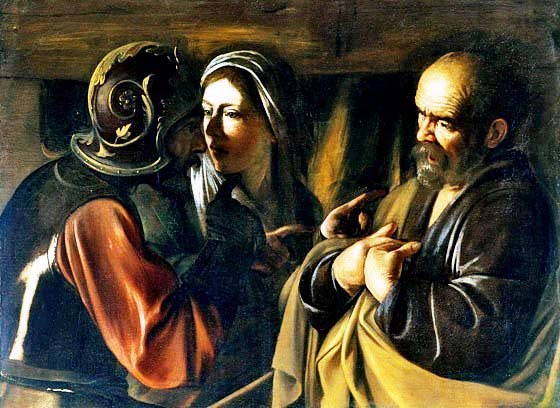
It doesn’t take much to deny Him. Ask Peter. We see him after the passover meal skulking around a fire,  countering his true identity and affiliation. This is the same man who said before anyone else, “You are the Christ, the Son of the Living God” This is the one who was bold enough to get out of the boat. This is the man of ambition whose words were always three steps ahead of his heart.

But he’s not alone. I, too, deny Him. I am quick to laugh with the crowd.

I, too, am quick to change my tune to match the beat of the clamorous cosmos.

I, too, allow my passions and my ambition to spin wildly out of control. I doubt His judgment regarding my life. I die on the wrong altar.

I, too, curse more vehemently and emphatically to preserve my own shadow mission.

But still He remains.

I don’t understand this kind of grace that covers my wrong thinking and illogical fears. And the struggle continues– my gangly, strutting, dodging, frenetic activity. But it is no match for His dogged pursuit. The Creator of love runs after me with profound determination.

Finally, after running from the truth, breathless, weary, I am mess to behold, And He is there.

This is not a soft-rock, falsetto kind of love, filled with flowery fragile words. This driving anthem of truth echoes wildly into the valleys of my rebellion and sallies forth with light and victory into the abyss of my futility.


Eyes of Compassion

Jesus hangs on the cross bearing the bleak rebellion of every age. Who can measure the weight of such a burden? Who can scan the circumference of this transaction? In our repentance we grieve of what our sin has done to us, but at the cross,  we mourn of what our sin has done to God.

This obelisk of sin that outweighed the mass of Jupiter leveled itself against His weakening limbs. Still his eyes remain compassionate. He speaks to the beloved ones of his life: “Woman behold thy son. Son, behold thy mother.”

This moment of compassion seems insignificant considering that humanity would soon be forever changed. Jesus was a Savior but indeed He was still somebody’s boy. We hear Him tie up the loose ends of His next of kin. These details would not escape the attention of Jesus.
We look back at the compassion of Jesus as He stood at the grave of a close friend. Those around Lazarus tomb that day observed His grief:

Jesus wept. The community said, “See how he loved him!”
John 11:35-36

Jesus knew the end of the story. He would call out and Lazarus would come forth, but He stepped into the moment.

He stepped into the pain.

He stepped into the grief of a broken family.
What are you mourning today? He is mourning with you. He, too, has compassion and is making accommodations on your behalf to get through this. You’ll get through it together.

We often forget that even though there are pressing issues on every continent, He still has a heart for the small. There are kings and presidents and war on every side, but Jesus still has the capacity to know your secret wounds and weep over the tombs of your cloistered dreams. He is a God of compassion.

He took care of the people He loved.

When we fail to remember this, we struggle. Jesus eyes aren’t solely fixed on the White House, the Vatican or the United Nations.

His eyes are in the marriage counselor’s office,

His eyes are on the wounded warrior half a world away,

at the funeral of a grandfather,

and under the bed of an abused child who prays for the gift of peace.

He’s there, too. 

The shape of the cross is the template of compassion. In order to die on the cross your arms must be open.

God of Wonders,

King of Glory,

Grant us the courage to look beyond our own pain and enter into the pain of another.

For in this act we receive a more glorious vision of the cross of our slain Savior, Jesus Christ.

In Whose Name we pray,

Amen


A Different View of the Cross

There was another perspective of the crucifixion. It was hidden from the gaze of those on Earth. The great cloud of witnesses watched from Heaven as Jesus exhaled one last time before mourners and murders. Millions of souls, from centuries past, witnessed in amazement the unthinkable death of Jesus. They watched His stillness from beyond the veil, perhaps in wonder. It seemed less like a death and more like a realization. Suddenly they understood their story.

David understood why giants fell and kings collided into their own destiny.

Abraham understood the incomprehensible test of Mount Moriah.

Jonah experienced epiphanies of his three days in the belly of the fish.

The three Hebrews who spent time in a furnace, recognized the Visitor again. This time on the cross…

Solomon understood the reality of a friend that sticks closer than a brother.

And Isaiah surely wept as he saw the Man who bore our griefs and was bruised for the iniquities of us all. 

They watched. All of them watched–the angels, demons and mortals, the judges and criminals– the wretched mass of man’s worst epics, the ravished ones of the innocent garden. Betrayers and hypocrites understood this story and their role in the middle of this divine denouement. The broken and beaten wept in the midst of their personal revelation. The rabble of messy humanity watched as the last drop fell.

And we too, like the men on the road to Emmaus who walked and dined with the resurrected Jesus, experience revelation. It’s a moment of epiphany.

We say to each other, “Were not our hearts burning within us while He talked with us on the road and opened the Scriptures to us?” (Luke 24:32)

The cross makes sense of our struggle. It endows us with meaning and hope. Some will never accept the truth of Jesus and His mercy until they stand before Him. I wouldn’t want to live a day without it.


The Hands of the Betrayer

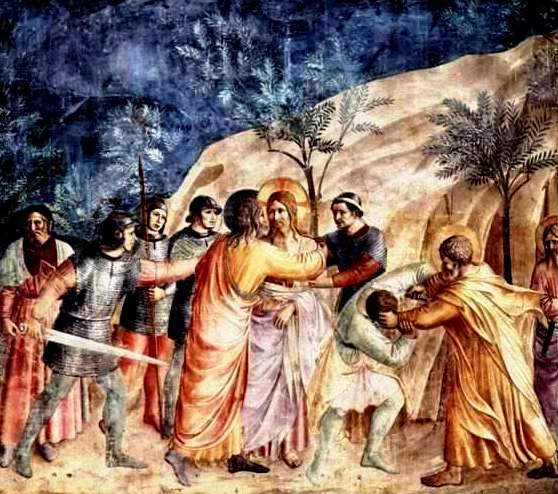
The betrayal of Jesus didn’t begin with a bitter kiss. It began with skepticism. All betrayal will find its roots back-stories and subplots.

The night before Jesus’ death on the cross, Jesus celebrated the passover meal with His disciples. His friends knew that Jesus carried a heavy burden. As they were eating Jesus said, “You can count on the fact that one of you will betray me.”

Jesus words crushed them as they looked at each other trying to decide if this was another parable. Others tried to understand who that betrayer might be.

Jesus said, “He who dips his hand with me in the dish will betray Me.” (Matt. 26:20-23, NKJV). Jesus didn’t come out and say, “OK. You want to know so here goes. It’s Judas. He’s the villain here. He’s the betrayer.” No one knows for sure why Jesus chose to give them a hint rather than a name.

I would imagine that those words were pondered long after that night. He did mean Judas. The Bible leaves no room for uncertainty as to the identity of the betrayer.

And their suspicions were well founded because Judas was the one. The one who identified Jesus in the garden. He was the originator of the kiss of death. Jesus wasn’t the kind of Messiah he expected. Jesus was a pauper, not a conqueror. Maybe Judas thought he could force His hand and be the catalyst of a great rebellion. And by the time He had realized his mistakes, by the time Judas had collected the blood money and changed the direction of history… By the time he had betrayed innocent blood—

it was too late.

Remorse overtook him. He threw the money into the temple courtyard and hanged himself.

His hand was in that dish because He was a betrayer.

Still there were others at the table that night.

I sit here typing this story, imagining how it all went down and I look at my hands and I realize that I’ve seen with my own eyes what the hands of a betrayer look like.

My hand was in that dish.

I was one of the betrayers, because in a thousand ways I have denied our Savior. In a thousand ways I’ve broken not His rules, but His heart. In a thousand ways I’ve qualified as a betrayer.

But the glory of the Gospel is that He lived and died for betrayers. And after He died, He rose from the grave and then went back to that same band of failures and underdogs. Astounding! The creator of the universe search for a rag-tag group of ragamuffins!

Can you hear the voices of the skeptics saying, “I can’t believe that he’s going back to Peter, the denier, Thomas the doubter, Andrew the glory hoarders, and on and on, because they all deserted Him and fled that night. All of them left Him!

And yet still there was one whom Jesus couldn’t redeem. He was a man so seized with grief and remorse that he threw the money onto the temple courtyard and hanged himself.

I know it’s not my place to judge history or to think of all the what ifs, but if I were a betting man I’d bet the farm that if Judas had waited three days, Jesus would have taken him back.

“How can you say that?” You ask.

Because he took me back. 

He died for betrayers. To take their shame in exchange for His glory. And He’s still calling out:

Come home. You denied me. You shirked responsibility at the very mention of my name. Come home. You doubted my Lordship, but I still believe in you, child. Come Home. You didn’t want me to be a suffering servant. You wanted a magician who could solve all your problems in the blink of an eye. But now you understand. So come home. You’ve kept silent in the past when I’ve wanted you to speak out. But you’re still my child. Come home. All is forgiven. You are free to love as You are loved. Come home.


If it be Your Will…

Out of the darkness of an ancient garden, we hear a sobbing voice. The One who crafted kingdoms and set the stars, pleads, “If it be your will, let this cup pass from me.” This plea reveals both His humanity and divine nature. He knows that destiny stalks Him on this night. It follows us as well.

When we run out of pretty prayers and Sunday School answers, pleading is an intimate, ugly cry that dares to cast away its pride.

Some roads we travel are eminent and relenting. There is no turning back, no escape…

  • We gather around a hospital bed as the beeping of the monitors slowly cease. If it be your will…
  • We leave our longtime home to discover a new life. If it be your will…
  • Our worst nightmares are realized as a prodigal is cuffed and carried away for years. If it be your will…
  • Documents are signed and delivered. The marriage is over. If it be your will…
  • Your mind is unclear and you are carried to assisted living knowing this room will be your last. If it be your will…

For Jesus, the world He came to save is now turning against Him. At this moment, one of His followers combs through the garden with a band of conspirators to capture Him. At the time of His greatest need, His dearest companions are comatose and negligent. He is utterly alone and the weight of the harrowing pain—every kind of pain including isolation, torture, shame, nakedness, blood and farewells, would soon appear under the rays of the moon and the poor light of a covered sun.

We see Him in the garden, a different garden that served as the arena of man’s fall, and He pleads, “If it be your will…”

Ultimately this is the cup of God’s fury. There is only One who experienced the wrath of God in its completeness, in it’s fearful symmetry, in a place where the forces of evil converge into one horrible event. This is place where Jesus is kneeling tonight– in the crosshairs of deep malevolence and holy blood soaked redemption. And Jesus knows this. He knows this well.

You may be pleading in your own sweat and blood eve of consequence. Pleading is messy prayer. It’s when we can do nothing else but cry out.

When we plead, we come to the end of ourselves and stumble toward the One who loves us. Beggars are never rejected at the footstool of the Almighty. We can come to the One who knows the harsh fulcrum of our pain.  When we fall, we fall to Him.


Away with Him

But they cried out, Away with him, away with him.
John 19:15a KJV

These heartless words are scattered across the landscape of a world full of religion, judgment, and bloodlust. And worst of all, the cruel apathy that pushes divine grace aside like a dead weed.

“Away with Him!” they shouted, as if this suffering Hero had the looks of last week’s garbage– vile and putrid under the haze of a bitter sun.

How often I have dismissed the precious Lamb of God from my life. I, like Pilate, have whisked Him off the throne at the slightest moment of inconvenience, seeking to please the masses by releasing the Lamb who knew no sin.

“Away with Him!” I’ve said, when life seemed unsure.

“Away with Him!” I’ve said in my exhaustion.

“Away with Him!” I’ve have said in times of pride and vainglory.

And we, the bride He so loved have said, “Away with Him!”

…from our culture,

…our schools,

…our homes,

…our values,

…our bank accounts,

…our futures.

We, like Pilate, have called out, faultless though Jesus is, “Away with Him!” We have washed our hands of this divine enigma.

Lord, Jesus Son of God, have mercy on us. We have condemned you with our actions in exchange for the false security of our personal idols and jewels. Lord, have mercy on our country for we too have condemned innocent blood.

There was no one standing beside You that day.

You stood alone without a defender. And in this moment, I draw strength from the thought that through You, I too may stand alone in my desperate hour of need. When I am treated unfairly, help me to reflect on that moment in History when, under the greatest anguish known to man, You suffered rejection as a balm of hope on my behalf. You stood under a cascade of shame and rejection so that I may draw strength and help in my darkest hours. 

Lord Jesus, Son of God, I thank Thee for the power to stand alone, defenseless.


The Path of Surrender

Jesus walked to the cross in total surrender.

He explained it this way: “No one is taking it from me; I lay it down of my own free will. I have the authority to lay it down, and I have the authority to take it back again. This is what my Father has commanded me.”  John 10:18 (HCSB)

There has always been a controversy around who killed Jesus. But Jesus was clear. He gave up His life as an offering. As we remember the brutal account of Jesus’ death, He invites us to see the cross as an embraced undertaking. We are His prize and He snatched us away from the enemy through the brutality of an unthinkable surrender. He loved us enough to engage himself in a 33 year passage toward an unspeakable end.

In this act we see how real love works and He is inviting us to enter this story, to live, die and live again. When we live like Jesus, life is ever before us as an opportunity to surrender everything. What does that look like for you? Only Jesus knows and He will reveal it to you soon enough.

Catherine Doherty’s Little Mandate

Arise — go! Sell all you possess. Give it directly, personally to the poor. Take up My cross (their cross) and follow Me, going to the poor, being poor, being one with them, one with Me.

Little — be always little! Be simple, poor, childlike.

Preach the Gospel with your life — without compromise! Listen to the Spirit. He will lead you..

Do little things exceedingly well for love of Me.

Love… love… love, never counting the cost

Go into the marketplace and stay with Me. Pray, fast. Pray always, fast.

Be hidden. Be a light to your neighbor’s feet. Go without fear into the depth of men’s hearts. I shall be with you. Pray always.

I will be your rest.

The image of the cross is an image of absolute surrender.

When we enter into the story of Christ we see a point in time when we cannot use our hands to control anything. Our will, determination, ambition and skill are nailed to the holy cross of Christ. While the world’s system teaches us how to control others and change ourselves, the cross has no such purpose. On the cross, our hands are not busy. They are surrendered. The cross compels us to die to that old foe that the world calls “a self-made man.” Everything that feeds our own power, pride, ego and self-determination has to go. It simply must. God is not improved by our efforts. He is glorified by our surrender.


When absolute and complete surrender takes hold of you, you will experience the bliss of satisfaction in Him. Whatever you have or don’t have… it wholly means nothing when you have given it all to Him. You live. You breathe. You worship. You give.

This is enough.


Gethsemane Courage

Everyone has a Gethsemane. This is the time when everything in your natural mind wants to run away. You realize that the next few hours, months or years are out of your control and that the decisions you make today could change your life forever.

Every David has a Goliath.

Every Esther has a Haman.

Every Paul has a Jerusalem.

Every believer has a Gethsemane.

We fear the unknown. We fear abandonment. We fear surgeons, retirement, cancer, termination, divorce, long-term dysfunctional relationships and, for some, even intimacy.

We come to the realization that closing our eyes, walking the plank and jumping off, may result in not only a change in location, but also being in the belly of a beast. What can you do when you are in the belly of a beast? Nothing but pray.

We all have a natural response to change, loss, and pain. We fear.

But Jesus displayed the courage that we need. I’m so glad for the Gethsemane narrative because it reminds me that every step toward the unknown, toward death, toward loss is not something me are experiencing in isolation. We have a Savior that whispers, “Me, too.”

Gethsemane courage isn’t fearless courage. It’s not a stony, lifeless courage. It is blood-sweat courage. It is self-talking courage that admits, “I’m scared out of my brain but I will step out, step forward, and step closer to God’s plan.”

Narrow is this way that leads to life.

Lord Jesus, Son of God, why am I so afraid of life in it’s unmasked glory? I long to move toward You and yet I am so afraid of the cost, the faith, the trappings of glory without evidence through sight. Teach me to rely on You. Show me the deep and abiding warmth of radical courage— the kind of courage that refuses to trust in only those things that I can see with my eyes and yet remain a saboteur of true and living trust in You.

Somehow, we have become comfortable with the cross. The cross is not a place of comfort. It is a place of courage in the midst of excruciating consequence.